If you didn’t need sleep, what would you do with all the extra time?
I’ve always been an “early to bed, early to rise” kind of gal. My childhood best friend and I were reminiscing the other day and she laughed while recalling how even at noisy slumber parties I would take myself to bed whenever I got tired enough. What can I say? I need my beauty rest, and lots of it.
But what if sleep wasn’t a necessity? What would I do if I had the full 24 hours in my day?
Short answer: EVERYTHING.
I would go to clubs and parties in the wee hours of the night, just to see what all the fuss is about. (I’ve long been skeptical that those places are actually fun after midnight.)
I would clean my house within an inch of its life and finally, finally be caught up on laundry.
I would stay up late talking with my husband, growing closer together as we watched the sun rise.
I would finish all the books I’ve been trying to read and get my library hold list down to 0.
I would have more sessions with my therapist.
I would exercise more. (The pandemic taught me that I will work out if I have literally nothing else to do.)
I would volunteer in my community.
I would spend more time with my family and friends. (Traveling wouldn’t be as big of a hassle if I could do it while the rest of the world is sleeping.)
I would blog more and finally start that memoir I’ve been itching to write.
And, if I’m really being honest with myself, I would probably long for the “beauty rest” I no longer needed.
I would reminisce about the 8-10 hours I used to sleep every day.
I would recall how good it felt to retire at the end of a long day, to quietly slip into that still pool of slumber.
I would achingly remember what it felt like to dream.
What part of your routine do you always try to skip if you can?
Every morning starts off (nearly) identically:
Wake up.
Enjoy a warm beverage (usually coffee, but homemade chai recently entered the rotation).
Check email, catch up on socials, or read.
A quick yoga flow with my lovely husband.
Next on the docket is my daily exercise. And this, my friends, is the part I skip if I can.
I’ve never been an athletic kind of gal. I’m much more the artistic type, due in large part to my diminished hand-eye coordination and general antipathy toward sweat and labored breathing. In high school when we had to run the mile, I leisurely walked the curves and ran lightly jogged the straight parts of the track. I ate what I wanted and assumed my youthful metabolism would take care of everything.
I was wrong.
Physical activity is so important for our bodies (of course) but also our mental health. In early 2020, I started doing cardio dance routines on YouTube out of boredom mostly, but also as a means to cultivate joy during a truly terrifying time. (I’m telling y’all, dancing to Backstreet Boys and the Spice Girls will put a smile on your face even in the midst of a global pandemic.) The habit stuck, and now I spend at least 30 minutes every day doing some sort of physical activity.
Well, almost every day.
Turns out I’m still not an athletic kind of gal and I don’t think I ever will be. I will always prefer sitting on the couch over going for a run. If I must exercise, I’d like it be in some form where it doesn’t feel like a workout—it just feels like fun. And on the weekends, I have been known to pretend like the running portion of my latest 4-week fitness plan just doesn’t exist.
But I am pushing myself to incorporate more physical activity while also eating more whole (vegan) foods in smaller portions. While I don’t look the same as I did in high school, I feel awesome! (I was too skinny back then anyway—that was the “heroin chic” era of the ‘90s-2000s when too many of us were focused on size instead of health.)
As I type this, I am sitting in my unfinished basement home gym dreading the 30 minutes of exercise I’m about to do. I really reallyreally don’t want to put in this work. But work I must.
Because my body, mind, and spirit are worth it the effort.
Guest blogger Melissa Howard shares some valuable insight on keeping yourself well as we move into spring:
Making health and wellness a priority isn’t easy. Most adults are overburdened. As a result, they aren’t as likely to make self-care a central focus in their lives. Luckily, there are some simple health-boosting techniques that can fit into even the busiest of schedules. Deep Curves Ahead shares some options below.
Make Time for Sleep Overall, adults usually need between 7 and 9 hours of quality sleep each night. It gives your body enough time to go through critical processes that keep you healthy, so rest needs to be a priority.
If you experience any signs or symptoms of sleep disorders, such as frequent waking or extreme fatigue during the day, it’s wise to see a medical professional. They can assess your condition and develop a treatment plan, ensuring you can get the rest you need.
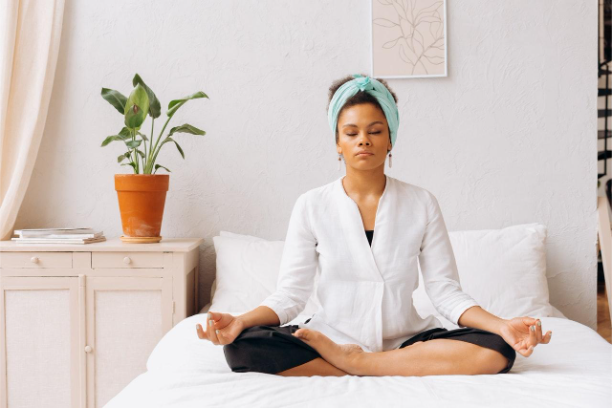
Use Stress-Reducing Techniques Many stress reduction techniques are easy to work into even the busiest of schedules. Meditation and deep breathing can be incredibly effective and can often be done nearly anywhere. Taking a second to watch a funny video is also an excellent option, as a quick laugh can be a natural mood-booster.
For some people, journaling is a great way to keep stress levels down. It lets them vent their frustrations in a safe manner, giving them an outlet. However, writing down what you’re grateful for can also work. With the gratitude approach, you focus on the positive, which can be a better fit for many.
Lastly, take a look at your surroundings and see if your home is cluttered — believe it or not, this could be a major source of stress and anxiety. Not only will cleaning up a bit help alleviate these feelings, but it can also release any negative energy this clutter has trapped in your home.
Examine Your Job For many people, their careers are a major source of stress. A lack of job satisfaction has a negative impact on your health, so it’s crucial to examine your work situation to see if it’s an issue.
When you’re not feeling challenged at work, boredom can become a problem. If you’re under constant stress, burnout is more likely to be an issue. When a workplace is blatantly toxic, it strains your mental health.
If your job is causing you a significant amount of distress, pivoting into a new career might be a smart move. Online degree programs make heading in a new direction simple. You can keep working and manage family obligations while you acquire new skills, allowing you to maintain a balance.
When you look for an online school, make sure it’s accredited. Additionally, research tuition costs, fee structures, and other related expenses to ensure the pricing is competitive. That way, you can secure a quality education without breaking the bank.
Get Enough Exercise Exercise is a big part of overall wellness. Not only can it keep you physically fit, but it can also reduce stress, lead to better sleep, alleviate symptoms of anxiety and depression, and more.
Most adults need 150 minutes of moderate-intensity exercise each week. Thankfully, it doesn’t have to happen all at once. As long as each session is at least 10 minutes long, you’re meeting the requirement.
Learn to Say ‘No’ In some cases, people struggle with their health because they’re overwhelmed. By learning to say “no,” you can get more control over your workload and personal life.
If you’re asked to accept a task or obligation that you genuinely feel isn’t a smart idea, say “no.” Don’t overburden yourself if it isn’t a genuine necessity or requires you to sacrifice in another critical area of your life. If you do, you can keep your workload manageable, relieving a significant source of stress.
“Every suicide is preventable. After losing her younger brother to suicide, Melissa Howard felt compelled to create Stop Suicide. By providing helpful resources and articles on her website, she hopes to build a lifeline of information. She went to school at University of Colorado, Colorado Springs and currently works as an executive assistant.”
As we move forward in this new year, guest blogger Melissa Howard shares some fabulous tips for making positive changes in your life:
Are you of a mindset that you need to turn your life around? Many of us make the mistake of thinking that the best thing we can do for ourselves is to make big, sweeping changes to our entire routine. After all, we think, if what we’re doing right now isn’t working, wouldn’t it be best to make major changes? Although this is well-intentioned, it relies on the logical fallacy that bigger is always better when it comes to self-improvement.
In reality, small changes are likely to make the biggest difference. Why? You’ll actually stick with them. DeepCurvesAhead takes a look at some techniques you can use to make yourself healthier, happier, and more excited to face each and every day:
Take Charge of Your Career
Many of us move through our careers in whatever way feels most natural and expected of us. We get a job that uses our skills or degree; we do the work and put in the time; we take the raises, promotions, and opportunities that come our way. Although this happens to work out well for some people, it can leave others feeling listless and out of control of their lives.
If you’re in the latter camp, take little steps each day to reclaim and take charge of your career. For example, you might decide you’d rather work for yourself than for a large company. Rather than jumping ship right away, however, you can start by taking on a little bit of freelance or contract work on the side.
Always check your contract to avoid breaking a non-compete clause, and consider forming an LLC if your work requires taking on any legal risks. Little steps each day will push you toward your ultimate goal.
Make Time for Exercise
It feels almost contradictory at first blush, but most of us live busy sedentary lives. If you have an office job, there may be days where your only real activity is the walk from your car to the office and back. As more and more of us work from home at least some of the time, even this short jaunt gets cut from our routines.
This constant inactivity leaves our bodies restless and in desperate need of movement. This can lead to increased anxiety, fatigue, and, of course, poor health overall. Fitting in something as simple as a thirty-minute walk each day, however, can make a huge difference.
Mix Up Your Style
Finally, now is a fantastic time to take a look at your personal style and see if it’s truly representing who you are. Many of us dress to satisfy others’ expectations of us, instead of wearing what we feel best in. Although you may be bound by formality expectations, such as wearing business clothing in the workplace, you should still strive to represent yourself as much as possible in what you wear.
However, many people don’t really know what their own style actually is. Consider picking up a new piece of clothing or accessory at a regular interval, such as monthly or every other week. Try it out for a while, and see if it suits you. If it does, you can use that as a launching point for the next item. If not, sell or donate it and try something else; avoid falling into the trap of too much stuff. This is a great way to gradually transform your wardrobe into items that feel authentic and empowering for you.
These are just a few of the ways you can make a big difference in your life by taking small steps. Remember, the smaller the change, the easier it will be to stick with, and the bigger an impact it will have in the long run.
About Melissa:
“Every suicide is preventable. After losing her younger brother to suicide, Melissa Howard felt compelled to create Stop Suicide. By providing helpful resources and articles on her website, she hopes to build a lifeline of information. Went to school at University of Colorado, Colorado Springs and currently works as an executive assistant.”


 deepcurvesahead